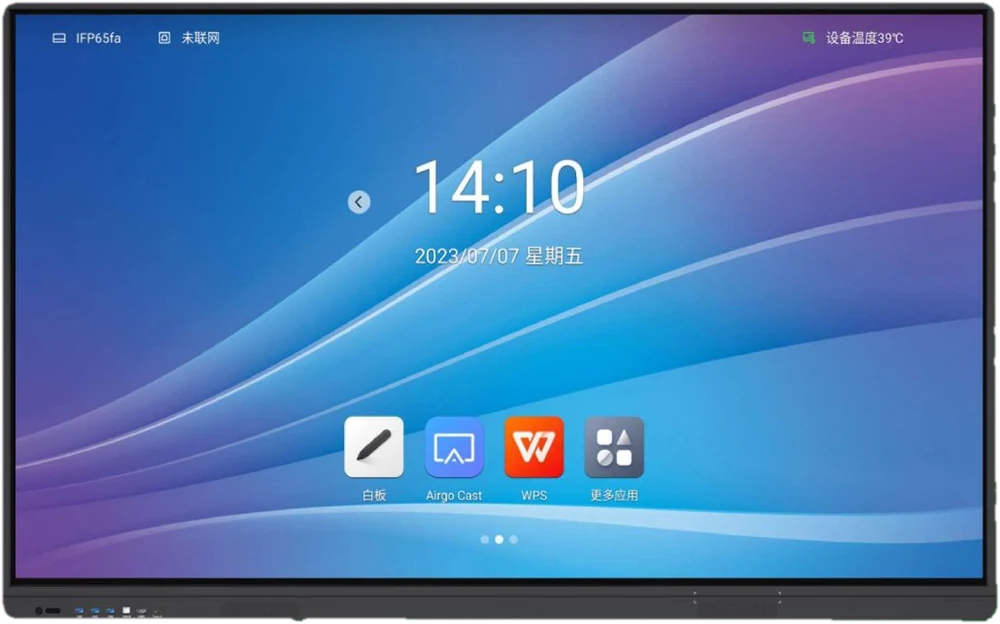
Walk into many classrooms today and you will see the same set-up that served the last generation: a chalk or marker board, a teacher at the front, and students doing their best to stay interested. The difference now is that those students spend the rest of their day with screens that respond the moment they touch them. A static board feels slow by comparison.
Attention is the real shortage
Teachers do not lack content. They lack attention. A lesson that lets a teacher draw a diagram, drag a picture, replay a clip and invite a student to the board keeps more of the room involved. Interactive screens make that possible without leaving the lesson to set up a projector or find a cable.
Technology has to fit local reality
Power cuts and unreliable data are part of planning for any Nigerian school. That is why the best classroom technology is built to keep working offline, with durable hardware and a simple interface that a busy teacher can use without a technician in the room.
When you assess a solution, ask what still works when the internet is down, how it is installed, and who supports your staff after the first week.
Parents notice the environment
Families choosing a school look closely at what their children will learn in. A modern, well-equipped classroom signals that the school takes learning seriously. It also gives teachers tools to show parents what is happening in lessons, which builds trust.
Where to start
You do not need to upgrade every room at once. Many schools begin with one or two classrooms, train the teachers who will use them, and watch how students respond. Once the results are clear, it is easier to plan the next rooms.
If you would like to see what a smart classroom looks like in practice, a short demo is the easiest first step.